

Table of Contents
- Why Christian Decor Belongs in Modern Homes
- The Core Principle: Intentional Design Over Decoration
- Minimalist Scripture Wall Art: Less Text, More Meaning
- Styling Religious Symbols in Contemporary Spaces
- Adding Depth with 3D Printed Faith-Based Figurines
- Room-by-Room Styling Guide for Christian Decor
- Common Mistakes to Avoid When Styling Faith-Based Decor
- Build a Sanctuary That Reflects Your Faith
- Frequently Asked Questions
Last Updated: September 4, 2026
Why Christian Decor Belongs in Modern Homes
Christian decor is the practice of integrating faith-based objects, scripture, and sacred symbolism into your living space through intentional design rather than random placement. A single well-chosen cross or a framed verse can transform a room from merely styled to genuinely meaningful. In this guide from FLM, we explain how to style Christian decor in modern homes without falling back on clichéd farmhouse tropes or making your space feel like a museum of religious kitsch.

The goal is visual worship that feels personal and current. Many people assume faith-based accents only work in traditional or rustic interiors, but contemporary decor and spiritual expression pair beautifully when you follow a few guiding principles. Whether you live in a spacious house or a compact apartment, the same rules apply: choose pieces with intention, respect negative space, and let each item earn its place.
Below, we'll show you exactly how to achieve this balance, from selecting minimalist scripture wall art to styling religious symbols in contemporary spaces. We'll also cover common mistakes and how to build a sanctuary that reflects your faith authentically.
The Core Principle: Intentional Design Over Decoration
The biggest mistake with Christian decor is treating it as an afterthought, like a shelf filler you bought because it was on sale. This approach produces cluttered, disjointed rooms where nothing feels connected.
Intentional design starts with a question: what do you want this space to communicate? A living room centered on hospitality might feature a warm, welcoming cross in natural wood tones. A bedroom meant for quiet reflection calls for softer textures and a dedicated prayer corner.
Christian decor is not about filling every surface with religious accents. It is about curating a few meaningful pieces that anchor the room's spiritual atmosphere. Think of each item as a conversation starter or a quiet reminder, not as noise. When you adopt this mindset, your home becomes a home sanctuary where faith and daily life coexist naturally.
Minimalist Scripture Wall Art: Less Text, More Meaning
Minimalist scripture wall art is the most effective entry point for modern Christian decor because it respects the architecture of your room. A single framed verse in a clean typeface reads as sophisticated design first and spiritual statement second.
The key is restraint. You do not need a wall covered in verses. One thoughtfully chosen passage, properly scaled and placed, carries more visual weight than a gallery of ten smaller pieces. This approach aligns with the broader minimalist aesthetic that dominates contemporary interiors while keeping your faith visibly present.
Choosing the Right Verse and Frame Style
Select a verse that holds personal significance, not just one that looks pretty in a font. Short passages tend to work best for wall art because they remain legible from across the room and leave space for the design to breathe.
For frame style, match the room's existing hardware and finishes. Black metal frames suit industrial lofts. Natural oak or walnut frames complement modern farmhouse settings. For a truly minimalist look, consider a floating frame that gives the artwork the illusion of hovering off the wall, which adds depth without visual clutter.
Placement and Gallery Wall Layouts
When hanging scripture wall art, eye level is your starting point, roughly 57 to 60 inches from the floor to the center of the piece (si.edu). In a living room, place it above a console table or sofa where it becomes a natural focal point.
For gallery walls, mix your framed scripture with secular pieces: abstract art, family photos, or botanical prints. This prevents the space from feeling like a chapel and keeps it grounded in real life. A common approach is to use the scripture piece as the anchor in the center, then build outward with complementary items in matching frame colors.
Styling Religious Symbols in Contemporary Spaces
Styling religious symbols in contemporary spaces requires treating them as sculptural objects, not just icons. This is where many people get stuck, unsure how to make a cross or a figurine feel modern rather than outdated.
The solution is context. A cross displayed on a stack of leather-bound books reads as curated. The same cross hanging on a wall covered in lace doilies reads as dated. Pair sacred objects with contemporary furniture and natural materials to ground them in the present.
The Cross as a Sculptural Focal Point
The cross is the most versatile Christian symbol because it works in nearly every room. For a modern look, choose a cross with clean lines and a matte or textured finish rather than a highly polished, ornate one.
Placement matters more than size. A medium cross on a entryway console creates a welcoming moment as guests arrive. A smaller cross on a nightstand or desk serves as a personal reminder throughout the day. The Everlasting Grace Cross from FLM, with its modern faceted design and clean silhouette, is an excellent example of how a simple decorative cross can complement contemporary furniture without competing for attention.

Blending Traditional Iconography with Modern Furniture
Traditional religious iconography, such as angels or detailed scripture pieces, can feel heavy in a modern room. The fix is to let the furniture do the heavy lifting while the decor provides the accent.
Pair a traditional piece with a sleek, mid-century console or a minimalist bookshelf. Use neutral tones in the surrounding decor so the religious accent becomes the visual anchor. This contrast between old and new creates a dynamic tension that feels intentional and fresh, rather than accidental.
Adding Depth with 3D Printed Faith-Based Figurines
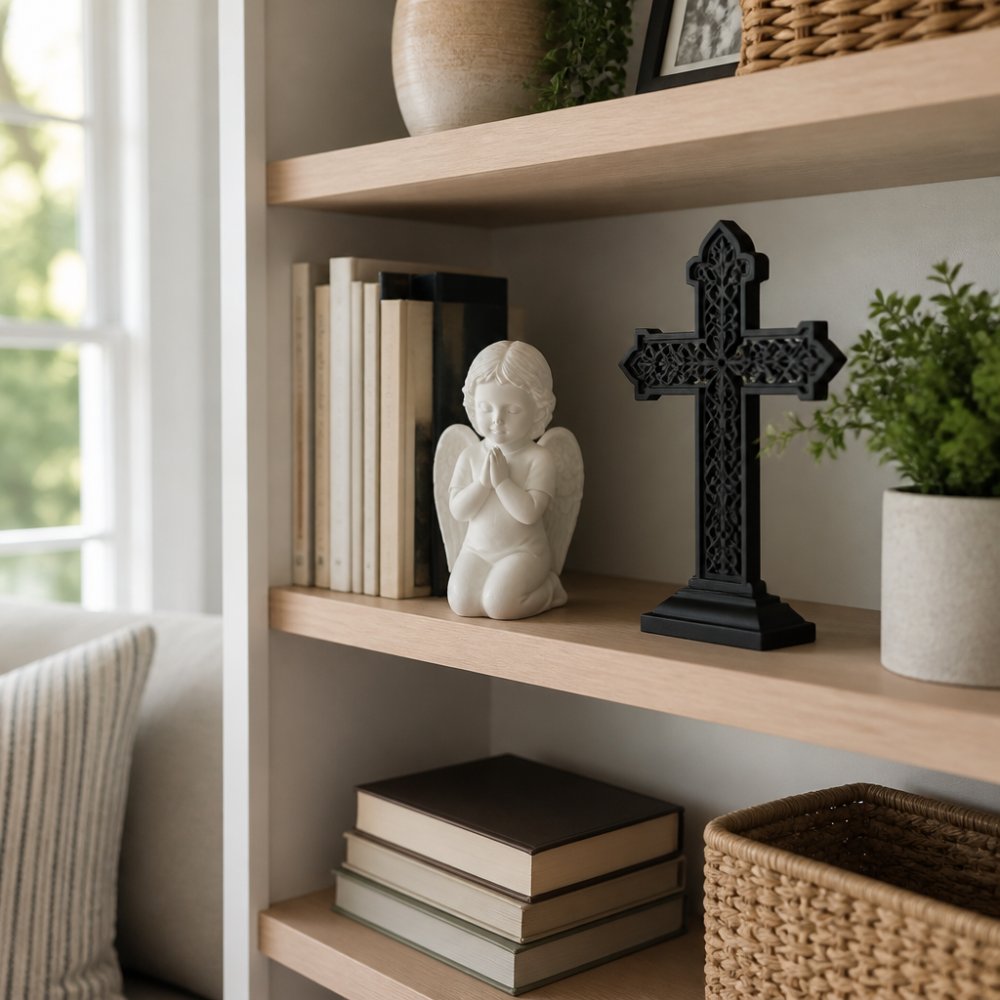
While 3D printed figurines offer a unique, modern texture, you don't need a dedicated collection to achieve depth. The most successful interiors treat these pieces as sculptural accents, not collectibles. A single, well-placed figurine can anchor a shelf, but the real design opportunity lies in how you combine it with other objects to tell a story.
The Budget-Friendly Styling Approach
Instead of purchasing multiple new figurines, consider a 'curated contrast' method. Place one 3D printed angel or cross next to items you already own, a stack of vintage books, a piece of driftwood, or a ceramic bowl. This juxtaposition of the modern, precise print with organic, found objects creates visual interest without requiring a large investment. The goal is to make the figurine feel like a deliberate art object, not a mass-produced trinket.

A Unique Angle: The 'Heirloom' Strategy
Most styling guides focus on what to buy. A more sustainable and personal approach is to integrate 3D printed pieces as modern heirlooms. Instead of matching them to your current decor, choose a figurine with a timeless form, like a classic praying angel or a simple cross, and style it with a handwritten note or a small, framed family photo. This transforms the object from a mere decoration into a vessel for memory, bridging your contemporary aesthetic with your family's history. This is a strategy that product-heavy listicles rarely address, offering a more meaningful path to decor that lasts.
Placement for Maximum Impact
For a 3D printed figurine, placement is everything. Avoid placing it in the center of a shelf where it can get lost. Instead, position it at the edge of a shelf, slightly overlapping the edge of a book stack. This creates a sense of depth and invites a closer look. In a bedroom, a small angel on a nightstand next to a reading lamp and a glass of water adds a quiet, personal touch without feeling cluttered. The key is to let the figurine interact with its environment, not just sit on it.
Room-by-Room Styling Guide for Christian Decor
Adapting Christian decor to a small apartment or a single room requires a different mindset than styling a house. The principles of intentionality remain, but the execution must be more strategic. This guide addresses the unique challenges of renters and small-space dwellers.
The Multi-Functional Living Room
In a small living room, every piece must serve a purpose. Instead of a dedicated console table, use the top of a bookshelf or a floating shelf as your display area. A small cross or a framed verse can be placed here, but it must compete with other items for visual space.
The 'Vertical Anchor' Technique: In a small room, wall space is prime real estate. Instead of a wide gallery wall, use a single, tall, vertical piece of scripture art. This draws the eye upward, making the ceiling feel higher and the room feel larger. Place it above a slim sofa or a narrow console to create a focal point without taking up floor space.
The Bedroom Sanctuary in a Shared Space
If your bedroom is also your office or workout space, creating a separate prayer corner may not be feasible. Instead, integrate your faith-based items into your existing setup. A small cross can be placed on a desk near your monitor, serving as a quiet reminder during work hours. A framed verse can be hung on the inside of a closet door, creating a private moment of reflection when you open it.
The 'Portable Sanctuary' Concept: For those with very limited space, consider a portable prayer kit. A small, beautiful box or basket can hold a journal, a candle, and a small cross. When you want to pray, you take the box to a comfortable chair or your bed, creating a temporary sacred space. This is a practical, flexible solution that respects the constraints of small-space living.
Entryway and Rental-Friendly Solutions
Renters often cannot paint walls or install permanent fixtures. For an entryway, use a command hook to hang a lightweight, fabric wall hanging with a scripture verse. This adds a personal touch without damaging the walls. A small, decorative cross can be placed on a shelf or a shoe cabinet, creating a welcoming moment without requiring a dedicated table.
Common Mistakes to Avoid When Styling Faith-Based Decor
Many people unintentionally undermine their Christian decor through a few predictable errors. Awareness of these pitfalls will save you from a space that feels cluttered or disjointed.
The most common mistake is overcrowding. When you place too many religious items in one room, they compete for attention and lose their individual meaning. A room with twenty crosses does not feel more spiritual than one with a single, well-placed piece. It just feels busy.
Another frequent error is ignoring scale. A tiny cross lost on a massive wall has no visual impact, while an oversized piece in a small room can feel overwhelming. Measure your wall space and choose pieces that occupy roughly one-third to one-half of the available area for balanced proportion (extension.iastate.edu).
Finally, avoid matching everything too perfectly. When every item in a room is the same color, finish, and style, the space feels sterile rather than curated. Mix materials, textures, and tones to create depth. For example, pair a matte black cross with a natural wood shelf and a woven basket to add warmth.
Build a Sanctuary That Reflects Your Faith
Christian decor in modern homes is ultimately about creating spaces where your beliefs feel at home. By focusing on intentional design, choosing meaningful pieces, and respecting the architecture of each room, you can build a home sanctuary that nourishes your spirit and welcomes others.
Start small. Choose one room and one focal piece. Live with it for a week and notice how it changes the feel of the space. Then build outward from there, adding pieces only when they truly resonate.
FLM offers a curated collection of 3D printed crosses, angels, and faith-based figurines designed to complement modern interiors. Each piece is crafted with precision in the USA, and custom orders are welcome if you have a specific vision in mind. Explore the collection and find the pieces that will anchor your home's spiritual atmosphere.
Styling Christian decor in modern homes is a journey of discovery, not a checklist. The challenge is resisting the urge to over-decorate and instead trusting that a few meaningful pieces will speak louder than many mediocre ones. FLM can help you find those pieces. Our 3D printed crosses and angel figurines bring a modern, sculptural quality to faith-based decor that traditional retail options often lack. Get started with FLM and create a space where your faith and your design aesthetic finally feel like they belong together.
Frequently Asked Questions
How do you incorporate faith-based decor without it looking cluttered?
Start with the 3-5-7 rule: group three items of varying heights on a mantel, five on a large console, and seven on a gallery wall. Choose a neutral palette for the room, then let one or two statement pieces, like a sculptural cross or a pair of 3D printed faith-based figurines, carry the visual weight. Rotate seasonal accents rather than stacking every meaningful item at once.
What are the best ways to display scripture art in a minimalist home?
Minimalist scripture wall art works best when the typography is clean and the frame is simple. Pick one verse that anchors the room, and give it generous negative space on the wall. A single large framed piece above a sofa or bed creates more impact than several small signs. Match the frame finish to your hardware, like matte black or natural oak, so the art feels like part of the architecture.
How can 3D printed decor add a modern touch to religious displays?
3D printed faith-based figurines and crosses bring a sculptural, architectural quality that flat prints cannot match. The Everlasting Grace Cross ($12.00) has clean lines that suit a shelf vignette, while the Everlasting Love John 3:16 Scripture Cross ($25.00) works as a bold tabletop anchor. Their matte PLA finish absorbs light softly, which keeps the pieces feeling contemporary rather than ornate.
Are there specific color palettes that work best for modern Christian decor?
Neutral tones like warm whites, greige, and soft taupe create a calm backdrop that lets religious symbols stand out without feeling heavy. For contrast, add deep accents such as hunter green, charcoal, or navy. The Hunter Green Edition of the John 3:16 cross pairs naturally with brass or oak tones. This palette keeps the space serene and helps the decor feel intentional rather than thematic.
This article was written using GrandRanker
0 comments